
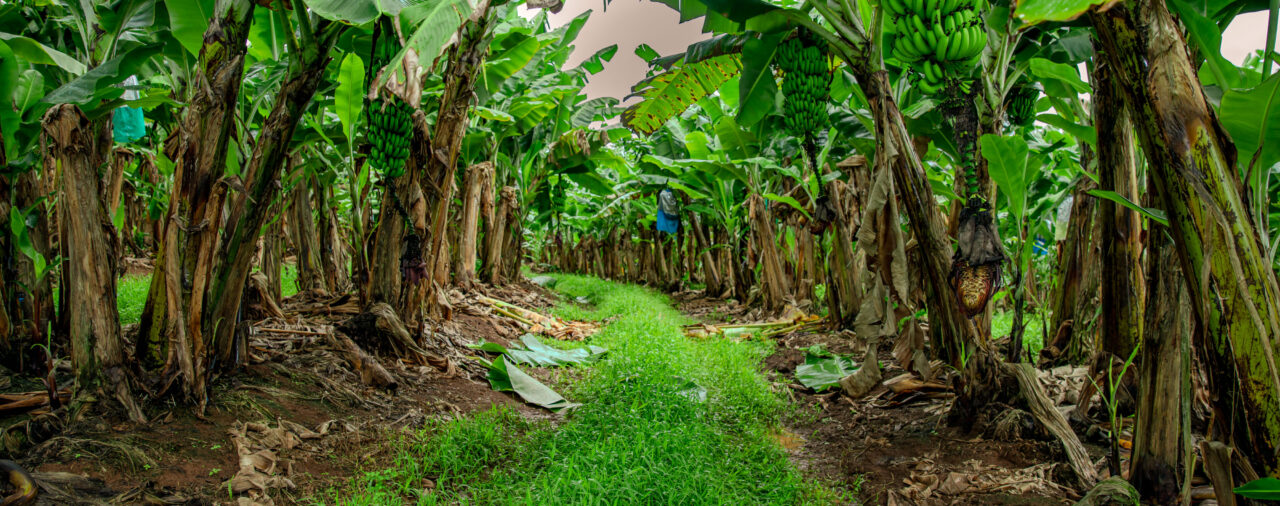
Australia’s banana growers are facing one of the most significant biosecurity challenges in decades. DAFF’s current review of quarantine arrangements—triggered by renewed pressure from the Philippines to permit banana imports—has the potential to reshape the future of the industry. The Australian Banana Growers’ Council (ABGC) is responding with a clear, firm and uncompromising position: Australia cannot afford to put its world-class banana sector at risk.
For growers, packers and supply-chain operators who live and breathe this industry, understanding the scale and seriousness of this review is essential. This is not simply a bureaucratic exercise – it is a high-stakes process with real implications for farm businesses, regional communities and the national economy.
Decades of pressure and the latest push
The current review is the latest instalment in a long-running effort by the Philippines to access the Australian market. Their campaign began in 1995, was technically approved in 2008 but never commercially viable due to strict biosecurity conditions, and re-emerged in 2018 with a request to ease those requirements.
Then, in early 2025, the Philippines escalated its demands—seeking not just alternative biosecurity measures, but access for an additional cultivar and a new export province. This move dramatically widened the scope and increased the pressure on Australia to reassess the application under its WTO obligations.
DAFF has since completed a preliminary review and officially allocated resources to push the assessment into its next phase. That is where Australia—and the ABGC—stand today.
How the DAFF review works
DAFF’s assessment process is tightly governed by protocols. While thorough, it does not automatically favour Australian interests. That’s why the ABGC is staying deeply engaged.
Key parts of the process include:
Hazard Identification
DAFF identifies pests and diseases associated with Philippine bananas—including pathogens like Moko and Black Sigatoka, which have devastated industries across the world and remain absent from Australia.
Domestic and International Technical Assessments
To understand risk on the ground, DAFF is conducting technical visits.
DAFF visited farms in North Queensland to see biosecurity in action, and understand key risks, in November. A technical visit to the Philippines—delayed to early 2026 due to extreme weather—will analyse conditions in farms, packhouses and export facilities. The ABGC is closely monitoring each step to ensure the reality of growing systems overseas is properly scrutinised, not assumed.
Determining the risk
DAFF examines the likelihood of pests entering, establishing and spreading in Australia. The ABGC consistently reinforces that risk ratings must reflect the on-the-ground experience of growers—not hypothetical assumptions or unverifiable offshore compliance regimes.
Recommended Risk-Management Measures
If imports are to be considered, DAFF must outline enforceable conditions. The ABGC argues that past experience with imported products has shown enforcement gaps, variable offshore compliance and insufficient audit capacity. The Council is making it clear: weak or unenforceable measures are unacceptable.
Public Consultation
While are campaign will be consistant throughout this process, the key time for official consultation will be at the release of the Draft Risk Assessment, expected late in 2026 or early 2027. This is where the ABGC’s national advocacy will be critical. ABGC has already positioned the industry as the leading authority on the risks, ensuring growers’ real-world experience is front and centre.
What’s at stake for the industry
Australia’s banana sector is globally unique.
• We remain free of Moko, Black Sigatoka and several other destructive diseases.
• The industry supports 18,000 jobs, 540 family farms, and thousands of associated businesses.
• Domestic production consistently meets consumer demand—over five million bananas per day.
The introduction of even one exotic pathogen could trigger decades of containment costs, lost production, and irreversible regional damage.
ABGC Chair Leon Collins puts it plainly:
“Allowing banana imports would be like opening the front door to diseases that could wipe out Australian farms. Once they’re here, there’s no going back.”
ABGC: A Firm, Vocal and Uncompromising Advocate
Since day one of the review, the ABGC has made it clear that protecting the industry’s biosecurity is non-negotiable. The Council is engaged with DAFF, monitoring every step of the process, and ensuring the full weight of growers’ experience shapes the assessment.
CEO Leanne Erakovic has repeatedly reinforced the importance of a science-driven, transparent process—but one that fully reflects the realities of farming and biosecurity risk.
“The stakes are high,” she says. “We will not allow theoretical risk assessments to underestimate the catastrophic consequences a single breach could have on our industry and regional communities.”
The ABGC is ensuring that DAFF and the Federal Government understand:
• There is no domestic need for imported bananas.
• Australia already enjoys a reliable, year-round, high-quality supply.
• The industry has invested millions in biosecurity—and expects the same vigilance from regulators.
• Any decision that undermines Australia’s disease-free status would be unacceptable.