Biosecurity And Banana Diseases
GOOD BIOSECURITY IS KEY TO SECURING A STRONG FUTURE FOR YOUR OWN FARMING BUSINESS AND FOR THE BANANA INDUSTRY MORE BROADLY.
Visit ABGC Grower Support (Biosecurity) for details about:
- Panama disease tropical race 4
- Surveillance
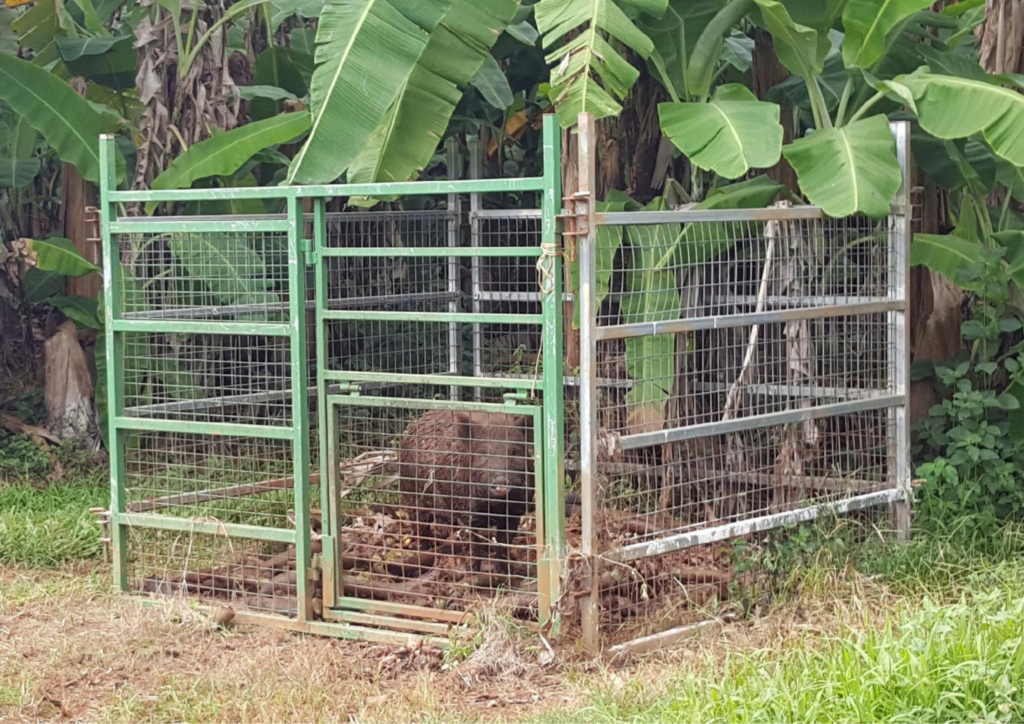
- Feral pigs
- Alternative land use
The site also offers a range of resources and fact sheets.
| Visit Grower Support (Biosecurity) |
The Better Bananas website has a huge range of biosecurity information including:
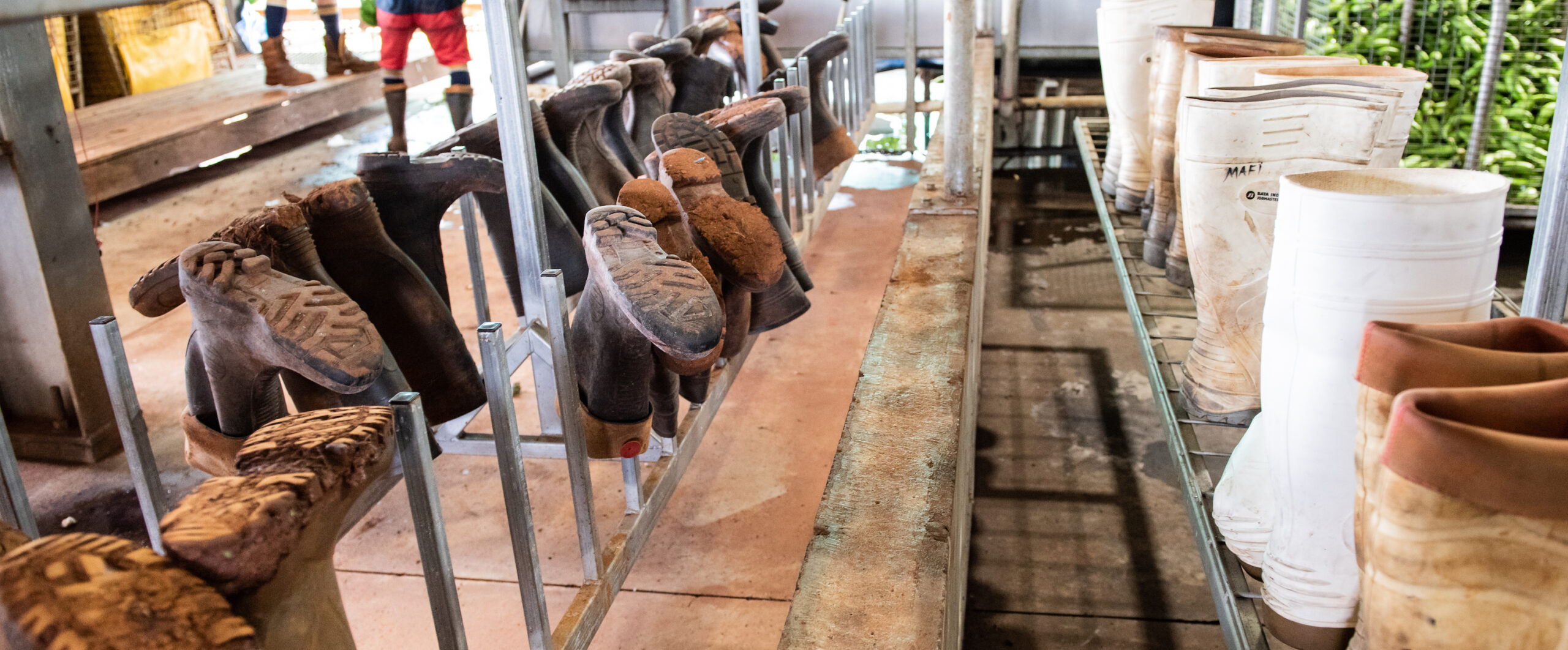
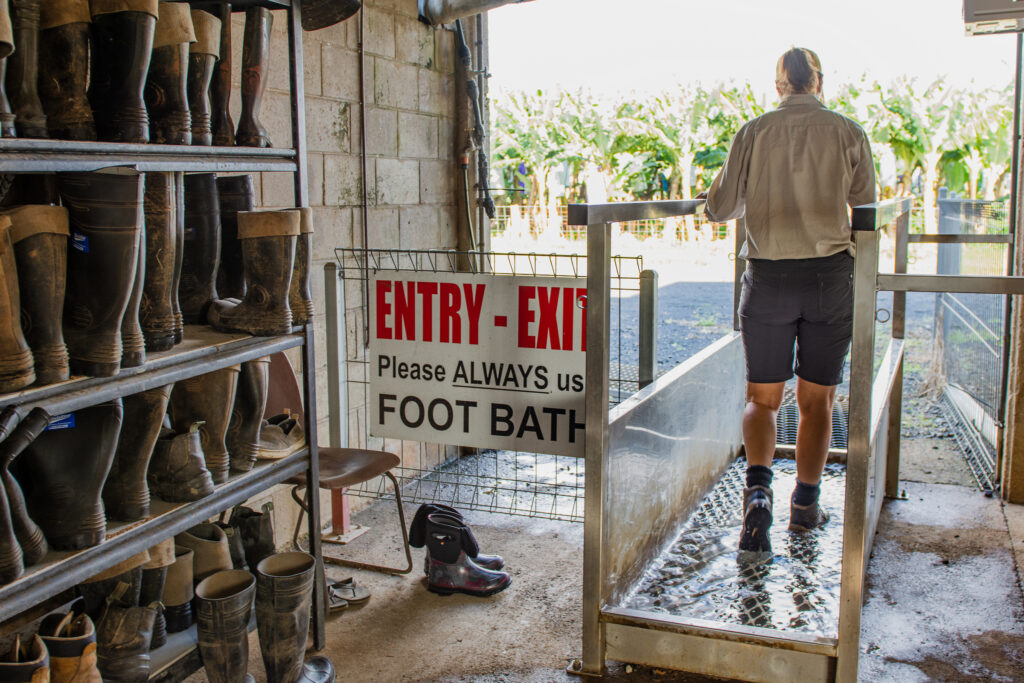
- Footwear management
- Drainage management
- Disinfectant and wash down practices
- Signage
- Zoning
Plus an extensive gallery on each of the topics to give you some ideas of what might work on your farm.
| Visit Better Bananas |
On-farm biosecurity is a vital component of day-to-day banana farming operations and minimises the risk of introducing new pests, diseases and weeds onto your property.
By completing this self-assessment checklist, you will quickly establish which on-farm biosecurity practices are working well and where improvements may be possible.
The checklist will also help you prioritise areas for improvement and can be used as the basis for your on-farm biosecurity plan.
| See the Biosecurity BMP |
A free shed poster is available, highlighting exotic and endemic biosecurity pests of concern. It features:
- Black Sigatoka
- Banana Freckle
- Moko
- Panama TR4
- Banana Bunchy Top Virus
| Secure your copy |
Yellow sigatoka is caused by the fungus Pseudocercospora musae (formerly known as Mycosphaerella musicola). Early stages of development appears as light yellow streaks 1 to 2 mm long. Streaks enlarge in time to become spots.
| Find out more |
The National Banana Bunchy Top Virus (BBTV) Program, part of the Hort Innovation ‘Enhancing pest surveillance, grower engagement and banana biosecurity resilience’ (BA24003), began on April 1, 2025 and operates in South East Queensland and Northern New South Wales. It is run by the Australian Banana Growers’ Council and funded by banana grower levies through Hort Innovation.
| Find out more |
If you suspect you have a High Priority Pest on your farm, you must report it to the Exotic Plant Pest Hotline immediately: 1800 084 881.
HIGH PRIORITY PESTS
The Australian banana industry has 17 High Priority Pests (HPPs). Just as the name suggests, HPPs are those that have been identified as posing the most risk to the industry. To find out more about each pest, simply click on the button below.
- Panama TR4
- Banana Bunchy Top
- Banana Freckle
- Black Sigatoka
- Blood Disease
- Banana Skipper Butterfly
- Eumusae Leaf Spot
- Moko
- Spider Mite
- Oriental Fruit Fly, Philippine Fruit Fly, Asian Papaya Fruit Fly
- Giant African Snail
- Grey Pineapple Mealybug
- Jack Beardsley Mealybug
- Mango Mealybug
- Philippine Mango Mealybug
- Thrips
- Abaca Bunchy Top
OTHER PESTS OF NOTE
While these pests are not on the HPP list, they remain a focus within the banana industry.
BIOSECURITY RISK
ABGC PROJECTS
The ABGC currently delivers two key projects related to biosecurity and banana diseases for the benefit of the national industry.
Grower Support (Biosecurity) leads the management of Panama TR4 on behalf of industry. The link above also includes a range of information on the disease for growers and community members.
A multi-pest surveillance and grower education program is also under way in Far North Queensland (through the Plant Health Officer), as well as in South East Queensland and Northern NSW through the National Bunchy Top Project.
Carl Rickson is the ABGC’s Plant Health Officer based in Far North Queensland and focussing on leaf spot.

| Email Carl |
Delivered through Hort Innovation: Enhancing pest surveillance, grower engagement and banana biosecurity resilience (BA24003)
The Grower Support (Biosecurity) team focusses on Panama TR4, delivering surveillance, feral pig management and increasing awareness.
| Find out more |
Funded by Plant Health Australia
The National Banana Bunchy Top Virus (BBTV) Program, part of the Hort Innovation ‘Enhancing pest surveillance, grower engagement and banana biosecurity resilience’ (BA24003), began on April 1, 2025 and operates in South East Queensland and Northern New South Wales. It is run by the Australian Banana Growers’ Council and funded by banana grower levies through Hort Innovation.
| Find out more |
Banana Biosecurity Code Of Practice
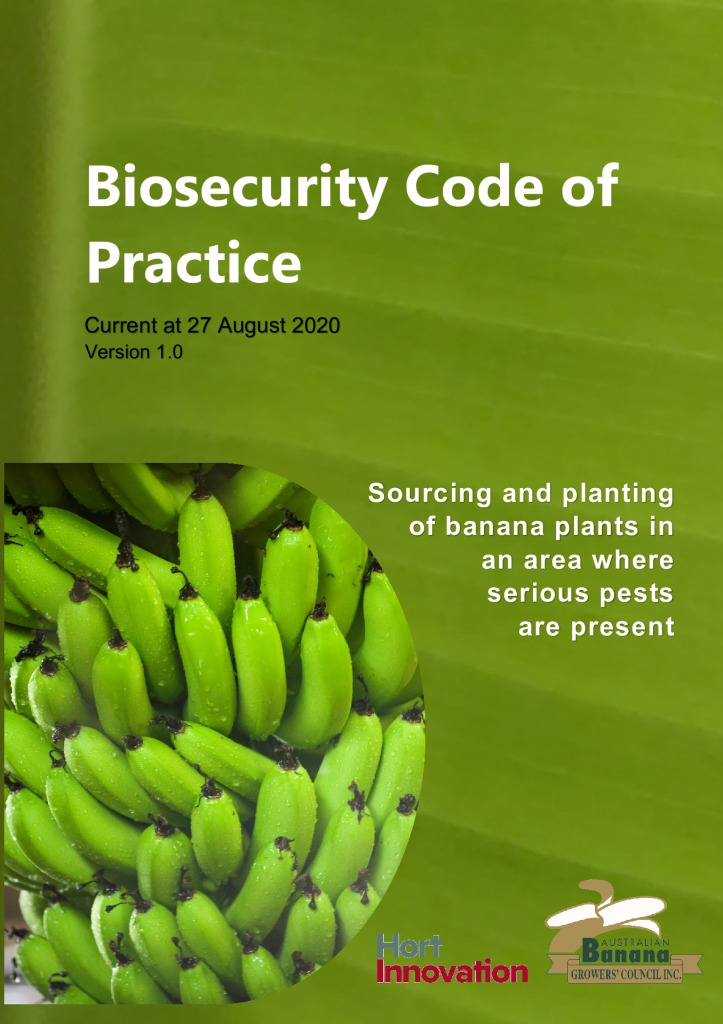
The Banana Biosecurity Code of Practice for Sourcing and planting of banana plants in an area where serious pests are present provides detailed guidance to growers on the use of planting material and outlines reasonable and practical steps to minimise associated biosecurity risks and protect the industry.
Download a copy below or email [email protected] to request a hard copy.
Feral Pigs
The Australian Banana Growers’ Council (ABGC) is committed to continuing to reduce feral pig numbers in the Tully Valley due to their significant economic, environmental and social impacts.
GOVERNMENT BIOSECURITY INFORMATION
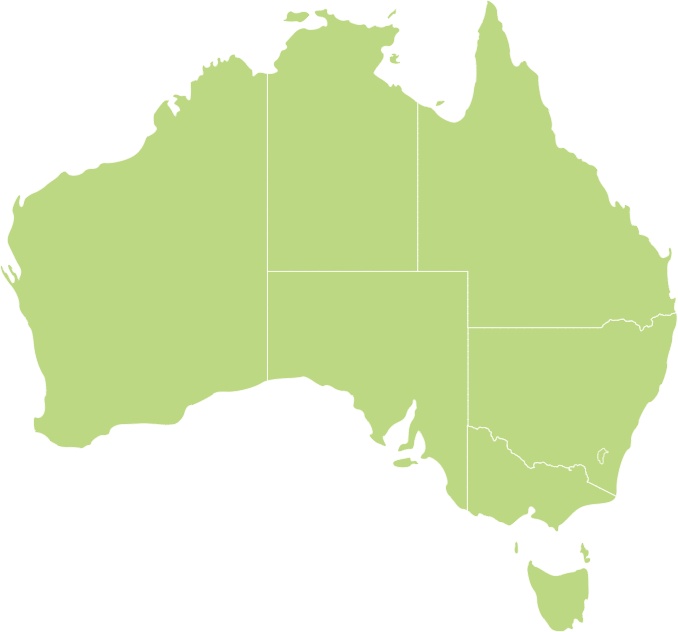
Biosecurity regulations vary across Australia, so it’s important to ensure you’re familiar with the current information for each State and Territory.
You can also visit the national biosecurity website https://www.biosecurity.gov.au and Plant Health Australia https://www.planthealthaustralia.com.au for more.