The Banana Imports Committee has been casting a watchful eye over the imports space for more than twenty years, having formed prior to the early 2000s campaign.

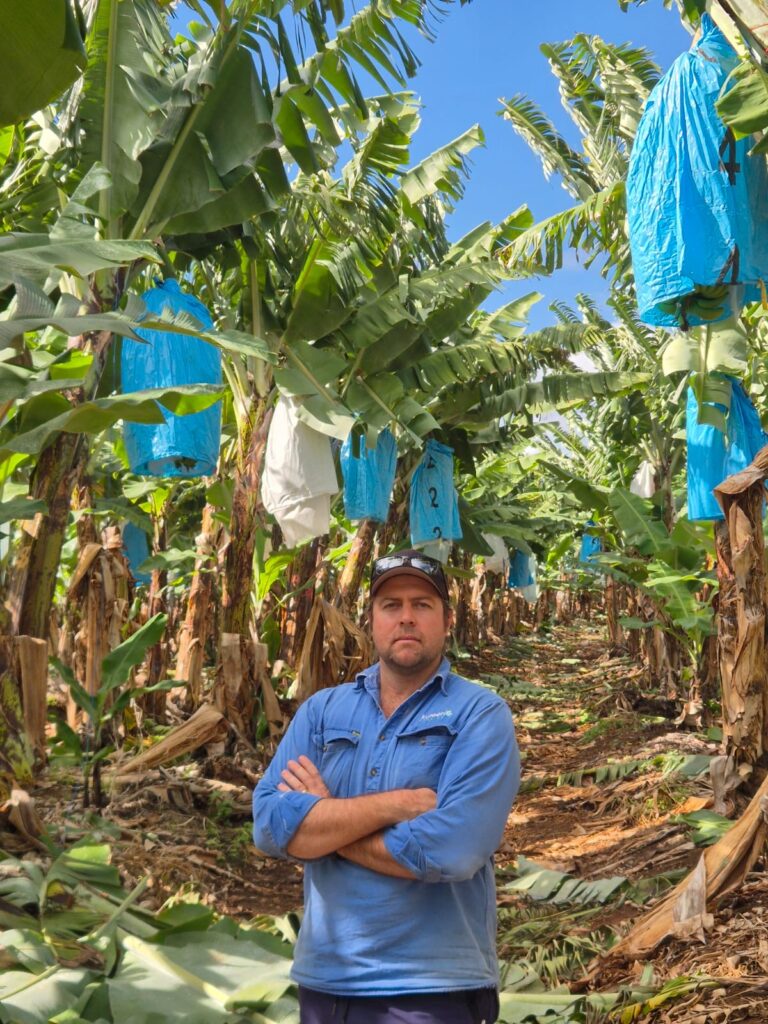
It’s currently led by Lakeland grower Paul Inderbitzin. Part of a multi-generational farming family, Paul has demonstrated a long-term commitment to improving outcomes for the banana industry while running his successful farming business.
Paul’s passion for this cause is deeply personal. Like banana farming families across the country, the risks brought on by imports threaten his family’s legacy and their livelihood in the future. Committed to fighting this cause with strategy and science, he’s got skin in the game spurring him on.
Paul’s knowledge of farming, media experience and qualifications make him a valuable and effective advocate.
A snapshot of Paul’s achievements:
• Third-generation banana grower
• 2013 Nuffield Scholar, completing his study in biosecurity and waste reduction
• Former director, Australian Banana Growers’ Council
• Former chair, Australian Banana Industry Congress • Finalist, Charlie Nastasi Horticultural Farmer of the Year
What is the Banana Imports Committee’s purpose and goals?
The Committee works alongside the Australian Banana Growers’ Council but is an entity in its own right.
It is currently focussed on mounting the industry’s case against the potential import of bananas from the Philippines (the imports risk assessment is ongoing).
The BIC executive (Paul, ABGC chair Leon Collins and ABGC CEO Leanne Erakovic) form the core group of decision makers but also draw on relevant subject experts, solicitors, researchers and political advisors as needed. These external parties are carefully chosen and represent leaders in their fields, to ensure the Committee can make the best possible decisions for industry.
The committee welcomes thoughts, ideas and suggestions from growers and other industry stakeholders. Reach out to [email protected]
The Australian banana industry is free from many of the world’s most devastating pests and diseases – BIC exists to help industry keep it that way.
REMINDER: THERE'S STILL TIME TO BACK THE BIFF!
THE BANANA IMPORTS FIGHTING FUND (BIFF)
WHAT DOES AN IMPORT RISK ANALYSIS LOOK LIKE?
There are two types of import risk analyses: the standard import risk analysis (IRA) and the Biosecurity Import Risk Analysis (BIRA) process. At this stage, the request from the Philippines to import fresh bananas is progressing through the standard path but it could move to a BIRA, which has additional requirements, if deemed appropriate or it meets certain criteria.
Standard import risk analysis
The standard risk analysis involves the following steps:
| Current request: bananas from the Philippines | ||
| Receive an import market access request. | ✅ | Fresh bananas were permitted to be imported from the Philippines in 2008. However, phytosanitary measures required haven’t been possible to meet. A request to review alternate measures was received in 2018. |
| Prioritise the import market access request. | ✅ | |
| Announce the commencement of the import risk analysis and notify stakeholders. | ✅ | Growers and other industry stakeholders were publicly notified on 16 September 2025. |
| Publish an issues paper for public comment. This step is optional, and depends on the good being considered. | Expected in the first half of this year (2026). | |
| Prepare a draft report after assessing the level of biosecurity risk and developing any proposed risk management measures. | ||
| Publish the draft report for public consultation, which is generally for 60-calendar days. Stakeholders are notified and encouraged to provide feedback on the draft report. We meet with stakeholders in person and/or online during the consultation period, as required. | Expected in late 2026 or early 2027. | |
| Consider all comments received and prepare the final report. | ||
| Publish the final report and notify stakeholders. | ||
