
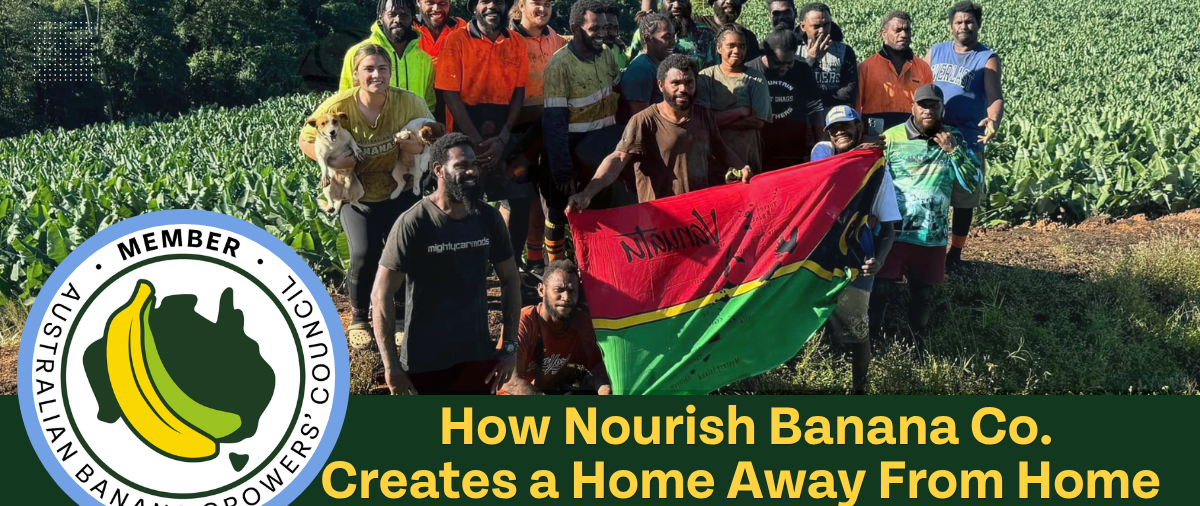
For many Pacific Australia Labour Mobility (PALM) scheme workers, arriving in Australia means leaving behind family, friends and familiar surroundings in pursuit of new opportunities. At Nourish Banana Co, creating a welcoming environment and a sense of belonging is just as important as producing quality bananas. The business focuses on helping workers settle in quickly and build strong connections with the farm and local community, an approach that also supports retention, with experienced workers returning season after season.
Nourish has been part of the PALM scheme since its early days, welcoming workers from Pacific Island nations to their farms in Far North Queensland for more than eight years. Today, the business employs around 40 PALM workers, who spend roughly nine months of the year in Australia and calling it their second home.
For Operations Manager Miki Buchanan, supporting PALM workers goes well beyond providing employment, it’s about helping them understand and feel connected to the Australian community they’re living in.
“Nourish Banana Co understand the Vanuatu culture a lot because we’ve taken the time to learn about it, and we love embracing it as well,” Miki said. “I’ve travelled back to their home country multiple times, and we really try to make Innisfail feel like a home away from home.”
For workers spending up to nine months away from their families and communities, that sense of belonging can make a significant difference. By taking the time to understand cultural traditions and maintain strong relationships with workers and their families, Nourish aims to help PALM workers feel welcomed, respected and supported throughout their time in Australia.
Home away from home
Creating a positive workplace culture is a priority at Nourish, and many of the team-building opportunities extend beyond the workday. For workers who are away from family and community for up to nine months at a time, that sense of connection can be the difference between a season that feels isolating and one that feels like home. The business believes that fostering strong relationships and a sense of community helps workers feel supported and valued.
These initiatives not only benefit worker wellbeing but also contribute to a more positive workplace culture, stronger team cohesion and higher levels of engagement across the business.
Nourish also organises a range of recreational activities, including deep-sea fishing trips, white-water rafting adventures and paintball events, as a way of recognising the hard work and dedication of their employees.
“We work hard, but we also want our employees to experience some of the wonderful things Australia has to offer,” Miki said.
However, appreciation at Nourish is not limited to special events. Miki believes that meaningful recognition often comes from simple, everyday gestures.
It’s the small things that make them feel appreciated,” she said.
That philosophy is reflected at the end of many workdays, when members of the management team walk around the farm with a box of chocolates, personally thanking workers for their efforts.
While the gesture may be small, it speaks volumes about the genuine care, respect and gratitude that underpin the culture at Nourish, helping employees feel valued and truly at home.
Breaking Down Language Barriers
One of the unique skills that Miki has picked up is the ability to communicate with workers in Bislama, one of the languages spoken in Vanuatu.
While she modestly insists, she isn’t fluent, Miki has spent the past two years learning the English-based creole language simply by spending time with the workers and listening to their conversations.
“It helps break down the language barrier,” she explained.
“If they need something explained in their own language, I can help them understand. It gives them reassurance and helps them feel more comfortable.”
Her language skills have proven especially valuable when workers first arrive in Australia.
“When they first get here, they’re often nervous and everything is new. Being able to speak with them in their own language helps break that nervousness and makes them feel more at ease.”
Miki’s ability to speak Bislama attracted widespread attention after she shared a video on social media. The video received more than one million views, introducing many Australians to a language they had never heard before.
“I never expected it to take off like that,” she laughed. “I think people were fascinated because they didn’t know much about the language or where it came from.”
Creating Opportunities That Last a Lifetime
While Nourish deeply values the contribution PALM workers make to their business, for Miki, one of the most rewarding aspects of the program is seeing workers achieve their goals and create lasting opportunities for their families back home.
“As much as we’d love to keep our PALM workers with us forever, it’s fantastic to see them spread their wings when they move on,” she said. “We try to set our workers up for success from the very beginning.”
The impact of that support can be seen in the achievements of former workers. Several have used their earnings to purchase buses and trucks in their home countries, creating new businesses and income streams that benefit not only their own families but also their local communities. Others have invested in housing, with at least eight workers building family homes through the opportunities they gained while working in Australia.
How can you support Miki’s Story and Nourish Banana Co.?
Miki is passionate about sharing life on a Far North Queensland banana farm and educating consumers about the Australian banana industry. Through her TikTok platform, which has grown to more than 15,000 followers, she provides a behind-the-scenes look at banana farming, highlights the important contribution of PALM workers, and shares the everyday realities of life on the farm.
You can also follow Nourish Banana Co. on Facebook to keep up to date with their latest farm activities, community involvement and workforce initiatives.
Want to share your story?
Stories like Miki’s are what make our industry so special. If you have a workforce story you think deserves to be told, reach out to Emily at [email protected], we’d love to help share it.