
Read the submission in full
Read the other stakeholder submissions
The Australian Banana Growers’ Council has raised significant questions following the release of the Federal Government’s Issues Paper on banana imports last month.
The federal Department of Agriculture, Fisheries and Forestry is currently conducting a Biosecurity Risk Import Analysis for the importation of fresh Cavendish bananas from the Philippines.
The Issues Paper, which closed for feedback on 16 July, provided high-level background on the assessment, key plant/pest groups to be considered and steps going forward.
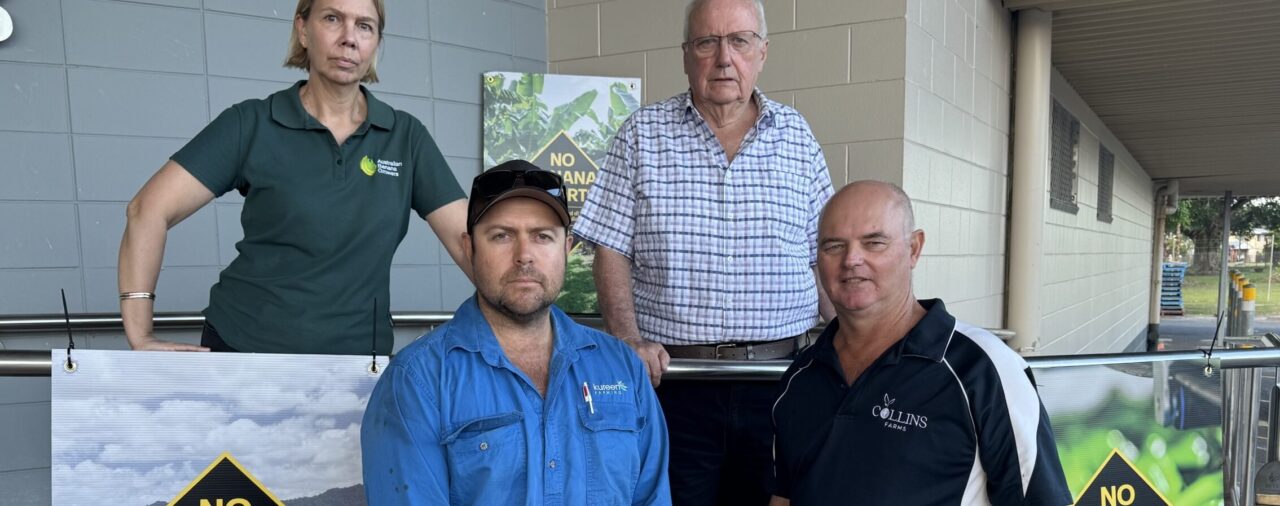
Chair of the Banana Imports Committee, Paul Inderbitzin, said:
We welcome the additional transparency the Issues Paper provides. However, we feel some concerns have only been amplified by its release.
Banana growers need far greater clarity around how the presence – or otherwise – of pests and diseases will be confirmed.
In addition, the industry needs confidence in how DAFF will validate any proposed control methods, and whether they will have to meet Australian standards.
The groups of pests and diseases identified by the Government are all valid. But we know that some of those groups have numerous sub-species and categories. Mealybugs, for example, have 2300 species. How does DAFF propose to account for all of these?
The ABGC’s response, which can be read in full here, also notes that it is increasingly evident that any decision made in this process will impact far more than the banana industry. The peak industry body has queried if, and how, DAFF will analyse hitchhiker pests, which could affect many other agricultural industries and Australia’s natural environment.
Paul added that the changing landscape for crop protection must be factored in:
In Australia, we have environmental stewardship top-of-mind while also managing an increasingly small toolbox for controlling pests and diseases. What chance do we have if Black Sigatoka or Moko gets a foothold here? How would DAFF have us even attempt to manage these diseases, that require extensive spraying and costly control methods in other countries?
The response to the Issues Paper draws on external expertise secured by the Banana Imports Committee through the Banana Imports Fighting Fund. The submission by ABGC to the issues paper is just the start of what will be required when the draft report is released, expected in 2027.
Put simply: it’s now game on.
Industry is all in when it comes to fighting imports to reduce the risk of importing more pests and diseases, and it’s a crucial time for raising the alarm as to what it could mean for Australian-grown produce and the communities it supports.
The outcome of this process will affect us all. The more growers who stand behind Banana Imports Fighting Fund, the stronger our industry’s position.