Changes to the Working Holiday Maker program announced in Canberra last week have significant implications for horticulture, but strong industry advocacy has already delivered some important progress for growers facing urgent workforce shortages.
The Federal Government announced a suite of migration reforms on 17 September, including changes to the Working Holiday Maker (WHM) program, an important source of flexible labour for horticulture and regional Australia.
For banana growers, the changes matter. While the banana industry has access to other workforce options including the PALM scheme, Working Holiday Makers continue to provide an important source of flexible labour, particularly for businesses needing workers to respond to changing production and seasonal requirements.
What is changing?
The Government has announced that:
- Second and third-year WHM visas will move to a ballot system. Applicants will still need to complete the existing regional work requirements to qualify, but completing that work will no longer guarantee access to another year.
- Second-year places will be capped at 45,000, compared with around 57,000 people who qualified last year.
- Third-year places will be capped at 5,000, a substantial reduction from around 31,000 who qualified last year.
- The Government has said it will stabilise WHM processing times at around three months, while restoring faster processing for some primary WHM applications.
- Agriculture is also being added as a priority sector under changes to skilled visa processing.
For horticulture, the concern is not simply the number of visas available. It is the potential impact on the incentive for backpackers to work in regional Australia.
The current system encourages WHMs to undertake specified regional work including agricultural work, to qualify for additional time in Australia. Under the proposed ballot system, a worker could complete that work but still miss out on a second or third-year visa.
The NFF Horticulture Council has warned that reducing that certainty risks changing whether workers choose to come to regional areas at all, potentially reducing an important source of flexible labour for growers.
Banana industry represented in Canberra
ABGC was part of the horticulture industry’s advocacy in Canberra as these discussions were unfolding.
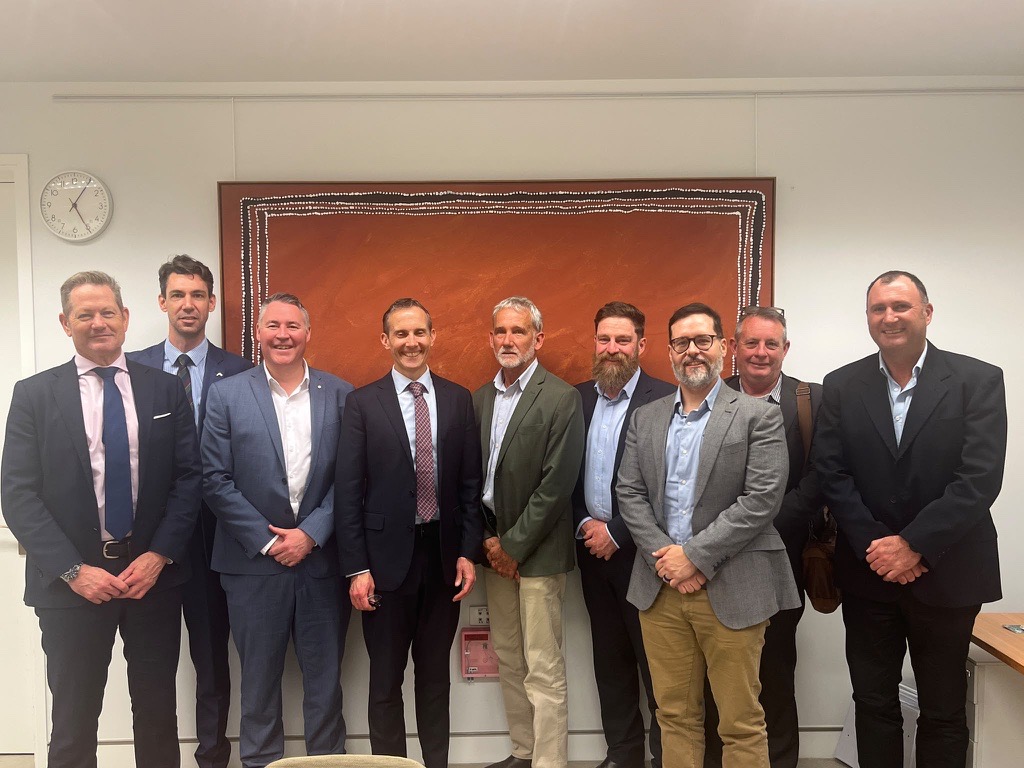
ABGC’s Acting Chair, Stephen Lowe joined the Horticulture Council’s ‘At Large in Parliament’ delegation, which met with Ministers, MPs and advisers from across Parliament to raise shared horticulture priorities.
Working Holiday Maker processing was a major focus.
Stephen was also present alongside horticulture leaders at Parliament House as the Council publicly called for normal WHM processing to be restored, warning that lengthy delays were colliding with Australia’s peak harvest period.
The message from horticulture that workforce settings need to recognise the realities of agriculture, where labour demand can change quickly and crops cannot simply wait for workers to arrive.
Some important progress
Since those meetings, industry advocacy has achieved an important short-term outcome.
The National Farmers’ Federation has worked with the Department of Home Affairs to establish a process for identifying genuine, urgent agricultural workforce cases that may be considered for priority WHM visa processing.
ABGC is working directly with the NFF to make this pathway available to members.
Growers with a genuine and urgent workforce need can provide ABGC with details of a worker who has already applied for a WHM visa, has been identified to work on a specific farm, and whose timely arrival is critical to the business.
ABGC will collate eligible member requests and provide them to the NFF, which will consolidate cases from across agriculture and forward them to the Department of Home Affairs.
Importantly, submitting a case does not guarantee faster processing or visa approval. Applications remain subject to Home Affairs’ normal assessment requirements and processing capacity.
Read today’s member update and find out how to submit an urgent case.
A short-term win, but more work to do
This is a welcome and practical response for growers who have workers caught in the current processing delays and demonstrates what can be achieved when agricultural industries work collectively.
However, it does not resolve the industry’s longer-term concerns.
The proposed caps and ballot system for second and third-year WHMs could have broader consequences for horticulture’s workforce.
ABGC will continue working through the NFF Horticulture Council and directly with government to ensure the practical workforce needs of banana growers are understood as the reforms progress.
Do you have an urgent WHM application?
If you have a genuine, urgent workforce need involving a worker who has already applied for a Working Holiday Maker visa, please see the member update for the eligibility criteria and information ABGC requires.