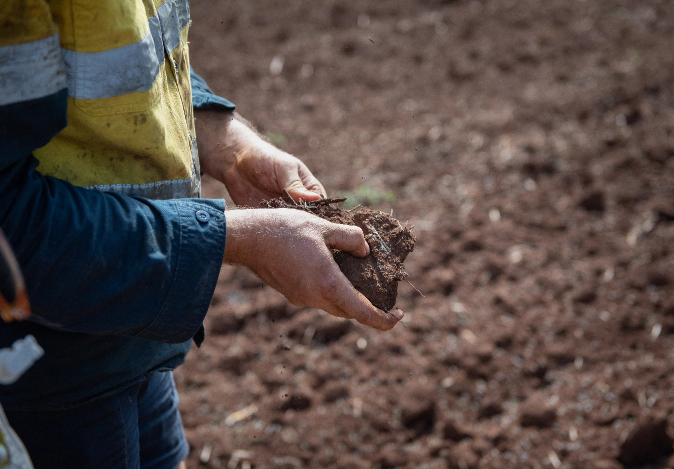
Compacted soil is one of the easiest ways to lose money on a banana farm without noticing. Roots can’t push through it, water sits on top instead of soaking in, and the fertiliser you’ve paid for doesn’t reach the plant. The good news is you can measure it and manage it.
To mark World Soil Day, the ABGC BMP team is hosting soils expert Dhiraj Gajera, Regional Soils Coordinator with the TNQ Drought Hub at James Cook University, for a free practical workshop for growers on how to tackle soil compaction and boost production. The TNQ Drought Hub, led by James Cook University, works with farmers across the Wet Tropics and wider Tropical North Queensland to build stronger, more resilient farms, including through its regional soil health program.
What you’ll learn
Dhiraj will cover how compaction affects soil health and crop production. He’ll also show you some practical fixes, including how to measure compaction with a penetrometer and simple ways to keep it down in your blocks.
Event details
When: Monday 7 December, 3pm to 5pm
Where: South Johnstone Research Facility, 24 Experimental Station Road, South Johnstone
Refreshments supplied.
Keep the soil conversation going
This workshop builds on the soil health workshops run earlier this year with soil biology educator Simon Mattsson. Those sessions showed growers that soil structure is one of three equal parts of a healthy soil, along with biology and chemistry. If you missed them, the BMP soil health video series covers the key messages, including a video on compaction, aggregates and pore space.
World Soil Day is held every year in early December. It’s a reminder of the role soil plays in farming, healthy ecosystems and food security. For banana growers it’s simpler than that: healthy soil grows better fruit for less money.
RSVP
Dhiraj Gajera: 0424 018 003
Amelia Foster: 0437 241 687
This event is supported by the Australian Government through funding from the Climate-Smart Agriculture Program under the Natural Heritage Trust.
The Banana Best Management Practice Project (2023–2026) is funded through the Queensland Government’s Queensland Reef Water Quality Program and delivered by the Australian Banana Growers’ Council in partnership with growers.