AUTHORS: Kathy Grice, David East, Daniel Farrell and Carole Wright – Department of Primary Industries.
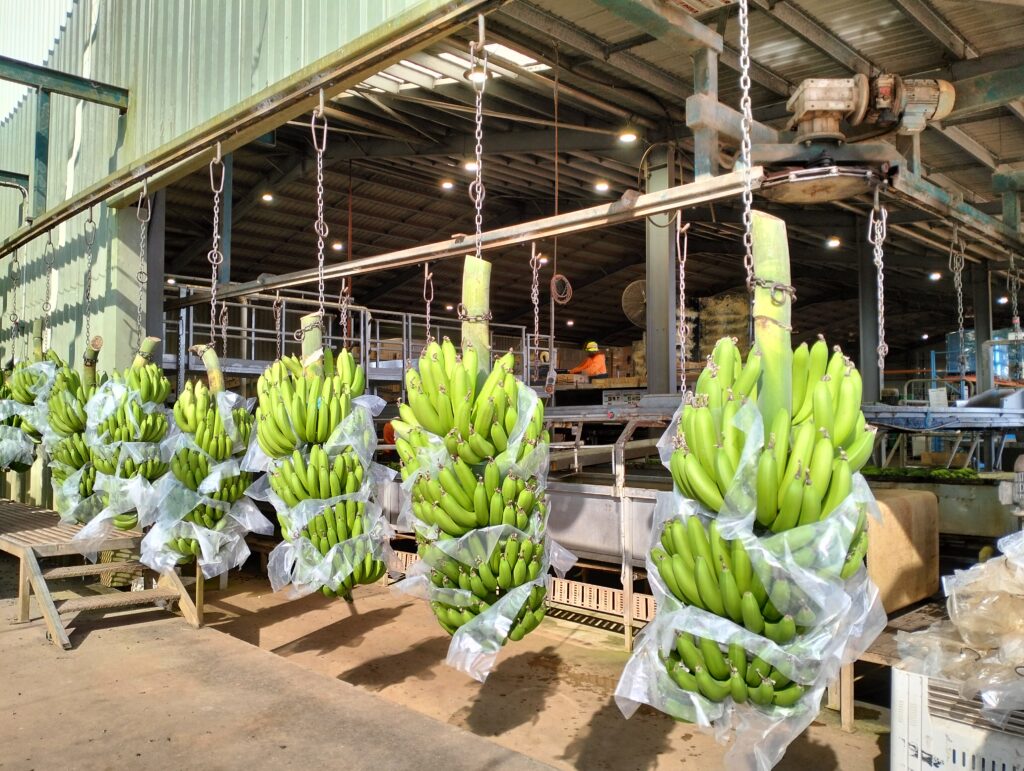
Harvested bunches on
the Atherton Tablelands.
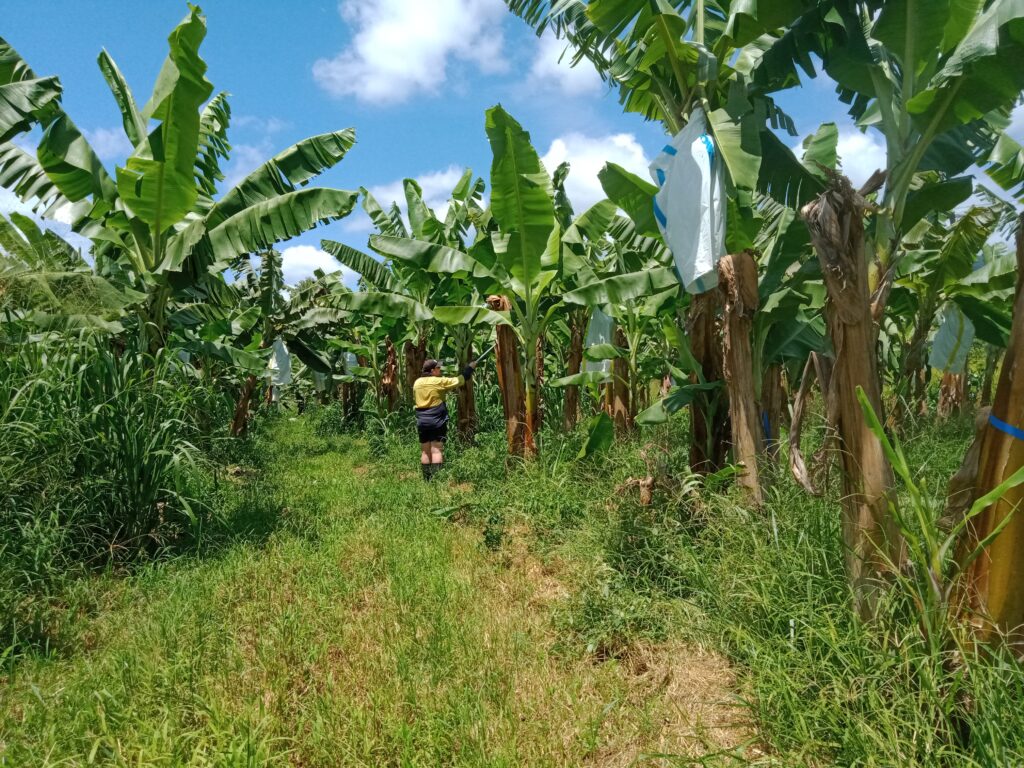
Deleafing at the
coastal farm.
Most banana growers are familiar with the chemical strategies and cultural practices required to keep yellow Sigatoka in check. However, prolonged wet conditions and warmer winters on the Wet Tropical Coast and Tablelands in the last few years have sustained disease levels year-round.
Trials conducted by the Department of Primary Industries (DPI) from November 2022 to March 2025 compared deleafing intervals on a conventional farm on the Atherton Tablelands and a low input production system on the coastal wet tropics. The DPI’s recommended deleafing regime was evaluated against grower practice.
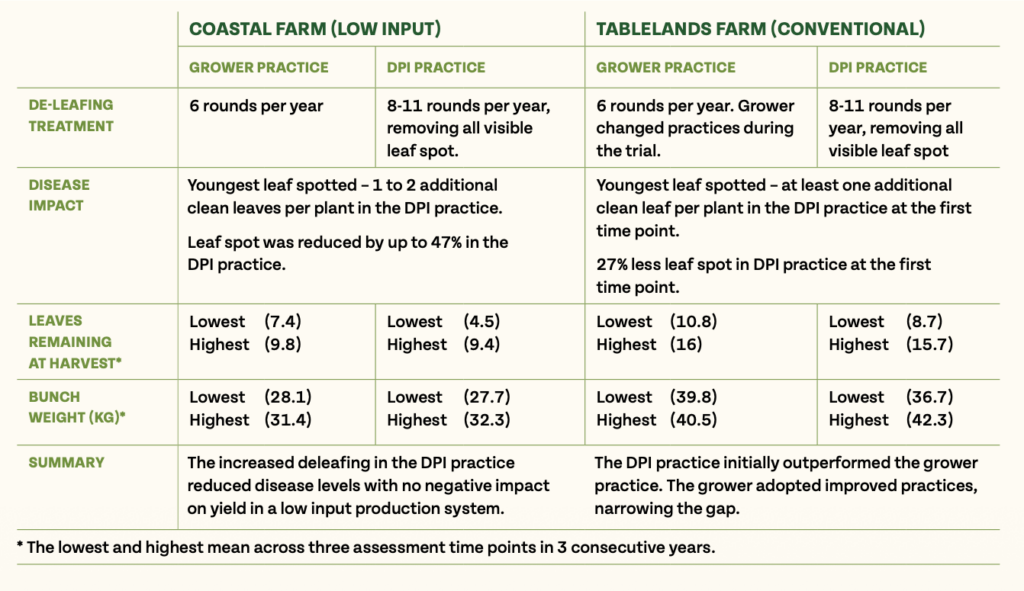
Disease assessments and harvest data were collected in three successive ratoons which were harvested at different times of the year. The results collected over the 28 month period are summarised in the table below.
Across three successive ratoons and two contrasting production systems, the DPI deleafing practice consistently reduced leaf spot. In the coastal low‑input system, more frequent deleafing alone delivered substantial disease reductions without compromising yield. In the Tablelands conventional system, the benefits were strongest when frequent deleafing was paired with strategic use of protectant and systemic fungicides, and grower adoption of improved practices during the trial further enhanced outcomes.
Importantly, increased deleafing did not negatively affect bunch weight, demonstrating that the DPI approach is an effective, yield‑neutral strategy for improving leaf spot management across different production environments.
Grower co-operator Andrew Serra was supportive of the trial work and made some significant changes to their leaf spot management. “Having the DPI team onsite on a regular basis allowed us to have frequent discussions and made us think more about our disease management practices. We conduct a minimum of 6 deleafing rounds per year, but this can vary depending on weather conditions and disease levels.
Changing to the mancozeb program has also allowed us to increase the rate of oil, making the systemic fungicides more effective.”