
Alternative crops
Through strong grower support, industry resilience and close collaboration with government, the banana industry has successfully contained Panama TR4 to the Tully Valley in Far North Queensland for over a decade. Building on this success, exploring safe and productive uses of Panama TR4-affected properties is an important step in securing the industry’s long-term future.
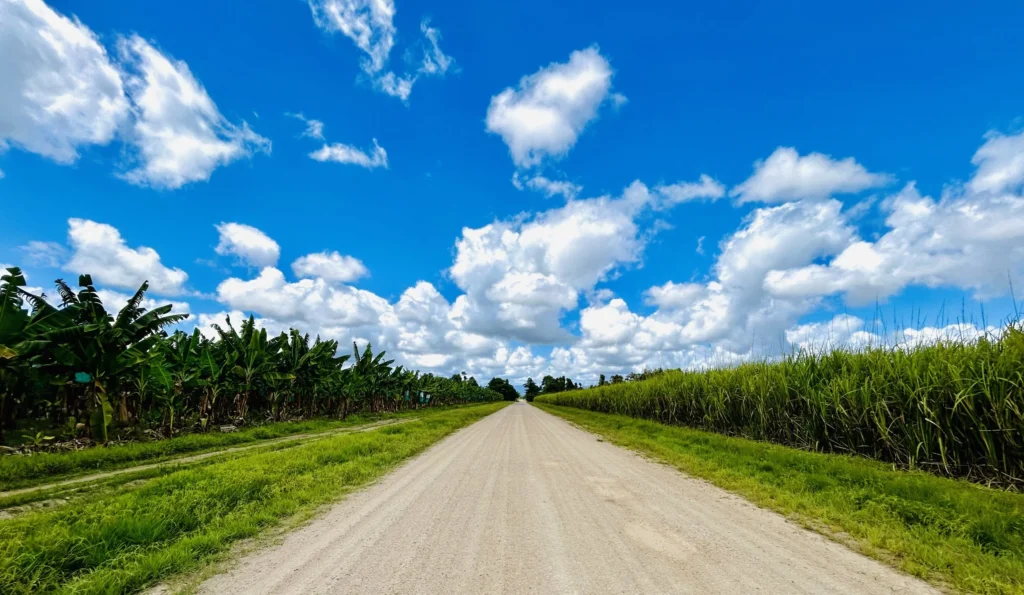
The Australian Banana Growers’ Council has worked closely with Biosecurity Queensland to approve sugarcane production on two Panama TR4-affected properties. This decision was enabled through property-specific risk assessments, expert consultation and close engagement with growers to ensure that sugarcane can be grown on those properties without comprising high biosecurity standards.
The assessments confirmed that, for the two approved properties, growing sugarcane poses no greater risk of Panama TR4 spread than the existing background risks—such as natural soil movement via water and feral pig activity. Where potential biosecurity risks are identified, tailored mitigation measures are in place to ensure those risks are effectively controlled and managed.
It is important to note that this is not a blanket approval. Each property is unique, with its own specific characteristics and risk considerations. As such, every application will be assessed individually and applications will be considered where an acceptable, managed risk is demonstrated through scientific evidence, property-specific risk assessments and targeted mitigation measures.
The Australian Banana Growers’ Council (ABGC) has been working with growers, scientists and biosecurity experts to explore the possibility of growing other crops on land affected by Panama disease tropical race 4 – without putting the rest of industry at increased risk. It’s now been a decade since the disease was first detected in Tully, and Australia’s success in slowing its spread has been recognised across the globe. This is due to the commitment of growers affected, with support from industry and government. Put simply: Because growers, industry, and government have worked hard to keep the disease from spreading, we now have an opportunity to explore safe, productive uses for land that was previously limited.
Acknowledging this and at the request of industry, ABGC has been investigating opportunities for land that has largely been locked down after a detection. In the first instance, the thorough risk assessment and mitigation process has focussed on the background risk of spread (like water or feral pigs) and the request to grow cane. There has also been consultation across a broad cross section of the banana industry.
Going forward, it’s important to note that this process will be a case-by-case and involve mitigation measures that are specific to farms and operational practices.
As always, your best defence against Panama TR4 and a range of other pests and diseases, is strong biosecurity on your own property.
No farming system is completely risk-free. What we aim for is acceptable, managed risk – based on science, property-specific assessments, and mitigation measures. This will be considered on a case-by-case basis, with final approvals being made by Biosecurity Queensland (BQ).
In the Tully Valley, cane and bananas have long dominated the tropical landscape. With established infrastructure and local knowledge, it’s perhaps not surprising then, that the first request to use land affected by Panama TR4 for something other than bananas focussed on cane.
Up until recently, those with farming with Panama TR4 were only able to grow bananas under very strict conditions. But 10 years since the first detection, and with broad industry support, the Australian Banana Growers’ Council recognised the need for land to remain productive without putting other growers at risk.
Following the initial request, the ABGC worked closely with Biosecurity Queensland (BQ) to conduct thorough assessments to evaluate the risk of farming cane on Panama-TR4 affected land.
These assessments involved expert consultation and property-specific risk analysis. The results showed that, in this instance, farming sugarcane did not increase the risk of disease spread beyond existing background threats like soil movement, water flow and feral animals. If risks were identified, tailored mitigation measures were developed to protect the broader banana industry.
Applications to use land with Panama TR4 for something other than bananas will continue to be assessed on a case-by-case basis. This ensures approvals and any mitigations are tailored to the specific conditions of each property. The same process will apply whether the request is to grow cane, or something entirely different.
Ultimately, it means that affected growers are able to make profitable use of their land without putting other farms at risk. It should also serve as a reminder that while Panama TR4 can be devastating, it is not the end.
We consider all major spread risks, including:
- Machinery movement
- Soil and water flow
- Harvest methods
- Road use and hygiene
- Farm layout and paddock design
ABGC’s Grower Support (Biosecurity) team leads the assessments, working with independent experts, BQ, and regional stakeholders.
Growers were at the centre of a decision to explore growing alternative crops on land with a confirmed detection of Panama TR4. Those farming with TR4, and many others who recognised their efforts in containing it, expressed concern about having productive land essentially ‘locked up.’ Under previous regulations, affected land could only be used to grow bananas. The Australian Banana Growers’ Council (ABGC) listened. Over the past year, ABGC’s Grower Support (Biosecurity) team has consulted widely with growers, technical experts and Biosecurity Queensland (BQ) to find a path forward. The result is an evidence-based, case-by-case framework that allows land to remain productive while keeping broader biosecurity safeguards in place. This framework involves a thorough, tailored risk assessment for any request and use of mitigation measures where appropriate.
Grower input has been crucial to developing this framework, and to working through two initial requests. Knowledge of land, farming practices and local conditions is essential to ensuring these decisions are fit for purpose – for the growers affected and industry more broadly. In short: growers are crucial to shaping the way TR4 is managed – now and into the future. By combining their insight with science and policy, the option to grow alternative crops reflects both responsibility and resilience, keeping the future of bananas secure while giving growers new opportunities.
Panama TR4 presents a serious challenge for the banana industry. Until recently, growers with Panama TR4 on their property were only able to grow bananas under very strict conditions. While the impact of this disease can be devastating, a positive detection is no longer the end of the road The option to grow a different crop opens the door for new opportunities to make productive use of land.
Following the initial request, the Australian Banana Growers’ Council (ABGC) worked closely with the growers, government and subject matter experts to understand the risk of farming cane on Panama TR4-affected properties. In this instance, farming cane on does not increase the risk of disease spread any more than the existing background threats like soil and water movement, feral animas, etc. Where risks were identified, tailored mitigation measures were implemented to address those risks.
Protecting our banana industry will continue to remain the primary consideration when allowing for Alternative Crops. Allowing sugarcane to be grown on Panama TR4-affected land is not a blanket approval. Every property is different with its own specific risk considerations. As such, any application to use land with Panama TR4 for something other than bananas will be assessed on a ‘case-by-case’ basis.
This ensures that approvals and any mitigation measures are consistent with the specific risks associated with the property. The same case-by-case approach will continue to apply for future applications as well, whether that be for cane, or something completely different.
For our banana industry, this is a significant milestone. It opens up an opportunity for future farming and as devastating as Panama TR4 is, it is not the end.